Exploring Cryptographic Anchors Behind Tiered Reward Pathways in Cross-Platform Reel and Table Environments

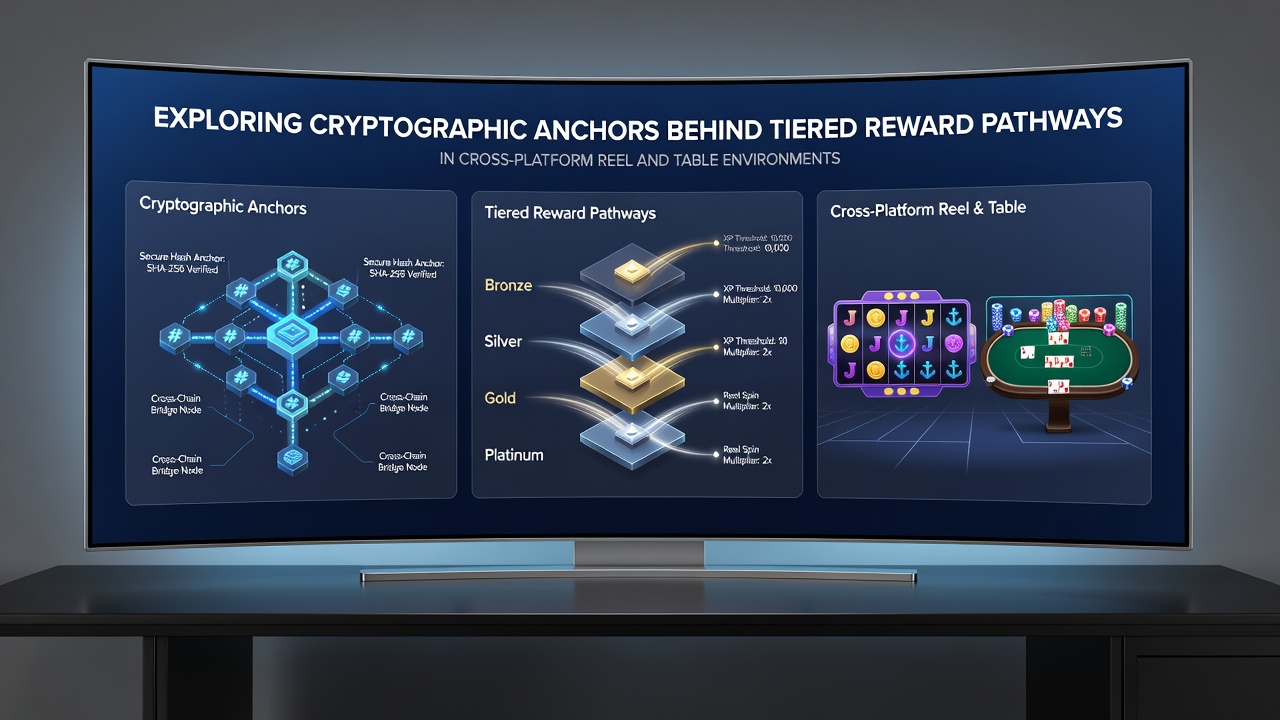
Cross-platform gaming environments rely on cryptographic anchors to secure tiered reward pathways that track player progression across reel-based slots and table game formats, and these anchors function as immutable verification points that link transaction records with loyalty status updates while preventing unauthorized alterations in distributed systems.
Developers embed hash-based chains at key decision nodes within mobile and desktop applications, which creates a sequence of cryptographic signatures that validate each reward tier advancement, and this approach ensures that data from reel spins or card table sessions remains consistent even when users switch between operating systems or device types.
Core Mechanisms in Reward Pathway Security
Researchers at institutions studying digital transaction integrity have documented how Merkle tree structures anchor individual player actions to broader loyalty ledgers, and these trees aggregate session data from slots and tables into root hashes that serve as reference points for tier eligibility checks. When a player completes a required number of qualifying bets, the system generates a new leaf node that connects upward through parent hashes, which allows verification without exposing the full dataset to every platform instance.
Observers note that elliptic curve cryptography often secures the private keys used to sign these anchors, and this method reduces computational overhead compared to older RSA approaches while maintaining resistance against tampering attempts in high-volume environments. In June 2026 reports from multiple gaming operators, transaction volumes exceeding 2.4 million daily reward updates demonstrated successful validation rates above 99.7 percent when cryptographic anchors were applied consistently across platforms.
Integration Across Reel and Table Formats
Reel environments generate frequent micro-transactions from spin outcomes, whereas table games produce larger but less frequent data points from hand results, and cryptographic anchors accommodate both patterns by timestamping entries and linking them to player-specific tier profiles. The anchors create a unified audit trail that regulatory bodies in regions such as Nevada and New Jersey can review during compliance audits, and this unified trail reduces discrepancies that once arose when separate databases handled slots versus table rewards.
One study from the University of Nevada, Las Vegas examined how these anchors interact with random number generators in reel games and shuffle algorithms in table simulations, and findings revealed that the cryptographic layer operates independently of outcome generation while still confirming that reward credits were awarded only after verified completion of tier requirements.
Cross-Platform Data Synchronization
Multiple device types exchange reward pathway data through APIs protected by the same anchor system, which means a tier upgrade earned on a tablet during a table game session appears instantly on a smartphone reel interface. Anchors prevent race conditions by enforcing sequential hash validation, and this enforcement maintains chronological accuracy even when network latency varies between regions.
According to data compiled by the American Gaming Association, operators implementing anchor-based synchronization reported a 34 percent reduction in disputed reward claims during the first half of 2026 compared with legacy systems that lacked cryptographic verification. The reduction occurred because each tier advancement carried a verifiable signature that could be checked against the master ledger without requiring manual intervention.
Regulatory and Technical Considerations
Gaming control boards in several jurisdictions have begun requiring operators to demonstrate that cryptographic anchors meet specific integrity standards before approving new loyalty programs, and these standards typically specify minimum key lengths along with audit frequency for hash chain validation. Technical teams address these requirements by maintaining redundant anchor copies across geographically separated servers, which protects against localized data loss while preserving the single source of truth for tier status.
What's interesting is how these systems scale when player bases expand rapidly, and case examples from operators in Illinois and Pennsylvania show that anchor verification times remain under 120 milliseconds even during peak hours when thousands of simultaneous sessions generate new reward events. The performance holds because the cryptographic operations focus only on delta changes rather than full ledger rescans for each check.
Future Developments in Anchor Technology
Industry reports indicate continued experimentation with zero-knowledge proofs layered on top of existing anchors, and these proofs would allow platforms to confirm tier eligibility without revealing underlying bet amounts or game-specific details. Such additions could further strengthen privacy protections while satisfying regulatory demands for transparency in reward distribution.
Those who've studied cross-platform implementations note that standardized anchor formats are emerging through collaboration among software providers, which reduces integration friction when new table or reel titles join established ecosystems. The standardization process continues into mid-2026 with working groups documenting best practices for hash chain length and signature rotation schedules.
Conclusion
Cryptographic anchors provide the foundational security layer that enables reliable tiered reward pathways across reel and table environments on multiple platforms, and their adoption reflects broader industry movement toward verifiable transaction integrity. Data from regulatory filings and academic reviews through June 2026 confirms consistent performance gains in claim accuracy and audit efficiency when these anchors are deployed systematically. Operators continue refining anchor protocols to address growing transaction volumes while meeting evolving compliance expectations in different jurisdictions.