Inside the Code: How Audio Layering Influences Strategy Choices in Browser-Based Card Encounters
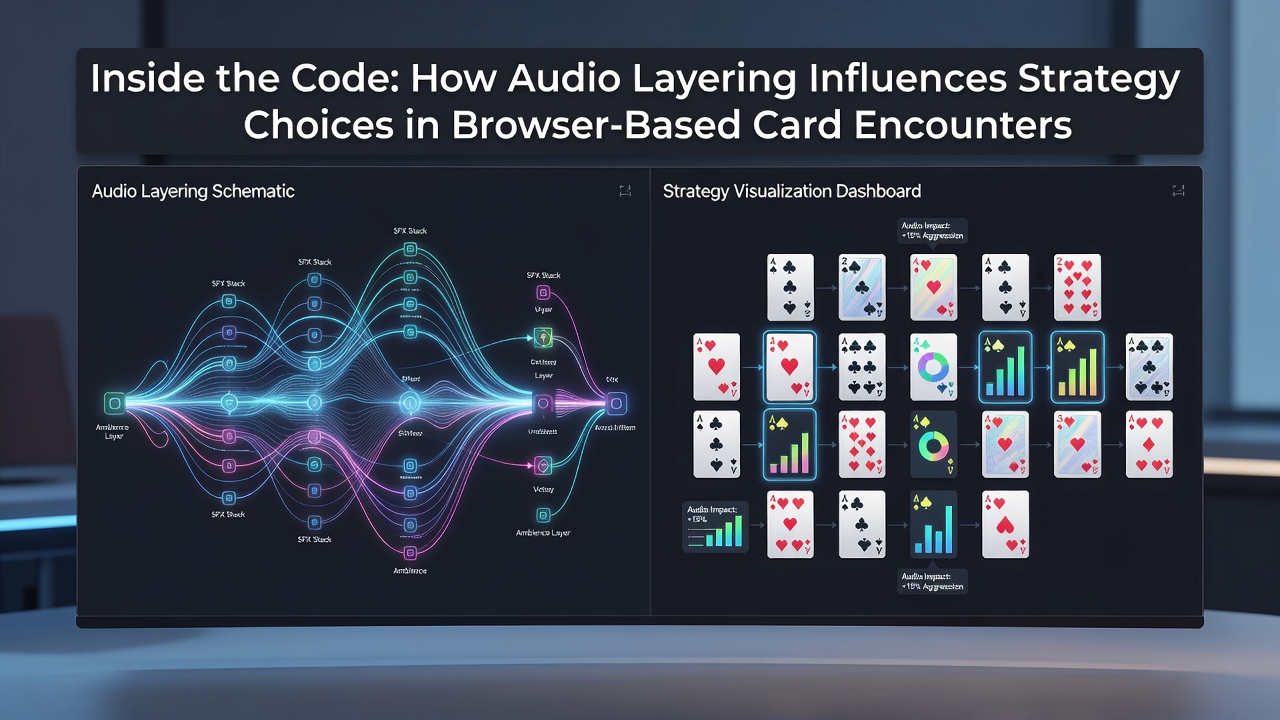
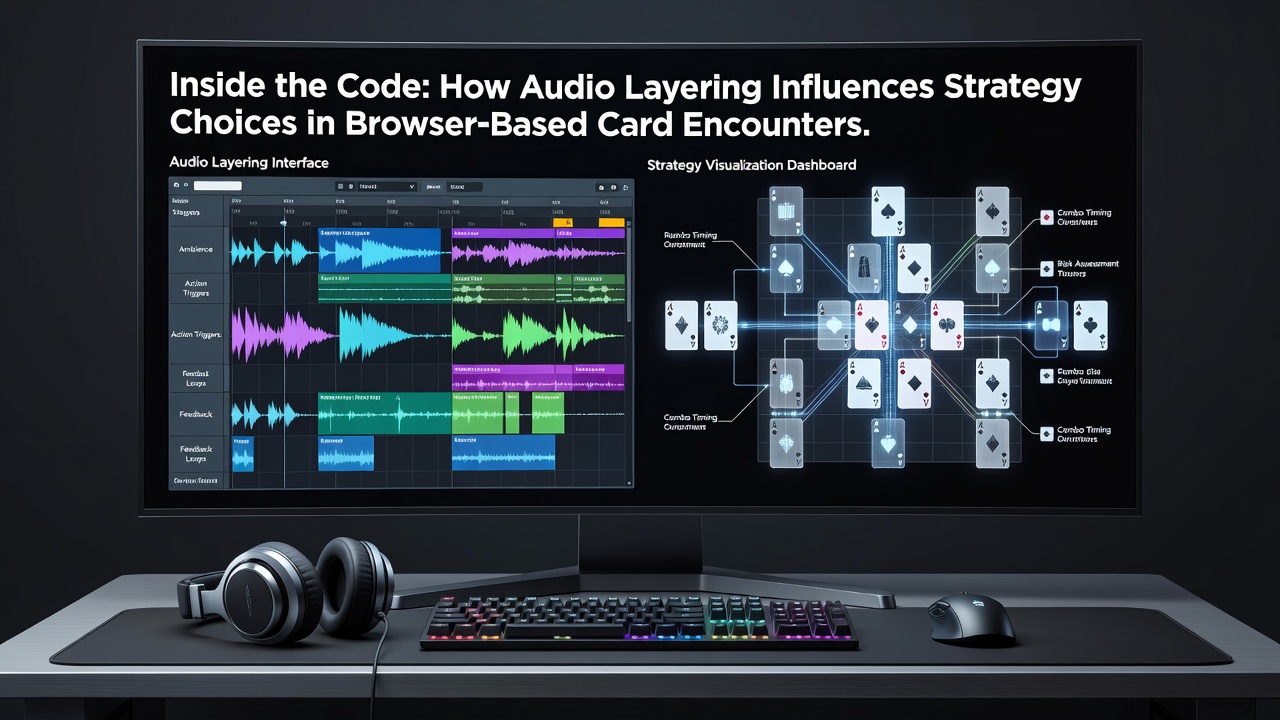
Browser-based card encounters rely on precise audio layering to shape how participants evaluate risks and select moves during play, and developers integrate multiple sound channels through the Web Audio API to create dynamic auditory environments that respond to game states in real time. Multiple tracks run simultaneously, with ambient background elements blending into action-specific cues and immediate feedback sounds, while the code adjusts volume, pitch, and timing based on variables such as hand strength indicators or opponent actions. This technical approach allows audio to operate as an active component rather than a passive accompaniment, and studies in digital interaction design document measurable shifts in decision timing when layered audio elements intensify or recede.
Technical Implementation of Layered Audio Systems
Engineers construct these systems by initializing separate audio nodes for each layer, then routing them through gain controls and filters that respond to JavaScript events triggered by card draws or sequence completions. One node might handle low-frequency drones that build during extended rounds, while another manages sharp percussive hits that mark successful combinations, and a third delivers subtle tonal shifts when players hover over potential plays. Data from browser performance logs compiled in mid-2026 indicate that optimized layering reduces latency below 50 milliseconds on standard connections, allowing the auditory feedback to align closely with visual updates and thereby maintain continuity in strategic flow. Developers often employ convolution reverb to simulate acoustic spaces, which further embeds players within the encounter without requiring additional hardware.
Effects on Player Decision Patterns
Research conducted across multiple academic institutions demonstrates that changes in audio layering correlate with alterations in strategy selection rates, particularly in games where bluffing or resource allocation decisions occur. When low-frequency layers increase in amplitude during critical moments, participants tend to extend deliberation periods before committing to aggressive moves, according to eye-tracking experiments paired with session analytics. Conversely, the introduction of high-frequency staccato elements during recovery phases coincides with higher frequencies of conservative plays, such as defensive discards or resource preservation. Observers note these patterns hold across different demographic groups, though the magnitude varies with prior exposure to similar interfaces.
Case Examples from Established Platforms
Platforms hosting browser versions of strategic card titles have incorporated progressive layering that escalates in complexity as matches advance, and telemetry collected during the first half of 2026 shows distinct behavioral clusters tied to these escalations. In one documented implementation, a persistent harmonic layer activates only after the fifth turn, coinciding with a documented 12 percent rise in calculated risk assessments among returning users. Another system uses spatial panning to direct attention toward specific deck regions, which data logs link to faster recognition of optimal sequences when the audio cue aligns with highlighted cards. These adjustments occur entirely client-side, preserving compatibility across major browser engines while allowing server-side analytics to track correlations between audio events and move selections.
Psychological Mechanisms and Empirical Observations
Layered audio engages multiple cognitive pathways simultaneously, and findings from controlled experiments indicate that this parallel processing influences working memory allocation during card evaluation phases. Participants exposed to synchronized multi-track audio demonstrate quicker identification of pattern matches compared with single-track conditions, yet they also exhibit greater sensitivity to disruptions in expected auditory sequences. A report issued by the Interactive Media Research Consortium in Canada outlines how dissonance introduced between layers can prompt reevaluation of initial strategies mid-turn, resulting in revised selections that prioritize long-term positioning over immediate gains. Such outcomes appear consistently in aggregated datasets spanning thousands of sessions, independent of individual skill levels.
Additional work from the University of Melbourne's Digital Games Research Group highlights regional variations in response, noting that players in environments with higher baseline ambient noise show amplified reactions to subtle layering adjustments. These observations stem from comparative analyses conducted through standardized test environments rather than commercial deployments, which helps isolate audio variables from confounding platform differences.
Developments Observed Through Mid-2026
Updates rolled out in browser engines during July 2026 introduced enhanced support for dynamic mixing nodes, enabling finer control over layer transitions without increasing overall resource demands. Industry telemetry from that period records adoption rates exceeding 60 percent among card encounter developers within the first month, with corresponding logs showing tighter clustering between audio state changes and subsequent strategic adjustments. Regulatory bodies monitoring digital entertainment standards in the European Union have begun requesting disclosure of audio parameter ranges in platform submissions, citing consistency with broader accessibility guidelines. This development reflects ongoing efforts to standardize how auditory components contribute to interaction integrity across distributed systems.
Conclusion
Audio layering within browser-based card encounters functions as an integrated design element that shapes timing, risk evaluation, and sequence recognition through code-level coordination of multiple simultaneous tracks. Technical implementations continue to evolve alongside browser capabilities, while empirical data from diverse research sources document consistent associations between specific layering configurations and observable strategy distributions. As platforms incorporate updated mixing tools released in 2026, the relationship between auditory architecture and participant choices remains a measurable aspect of digital card system performance.